01
The filter
Every eye lands on the same region. The brain answers, then suppresses the answer before conscious report.
Neuroscience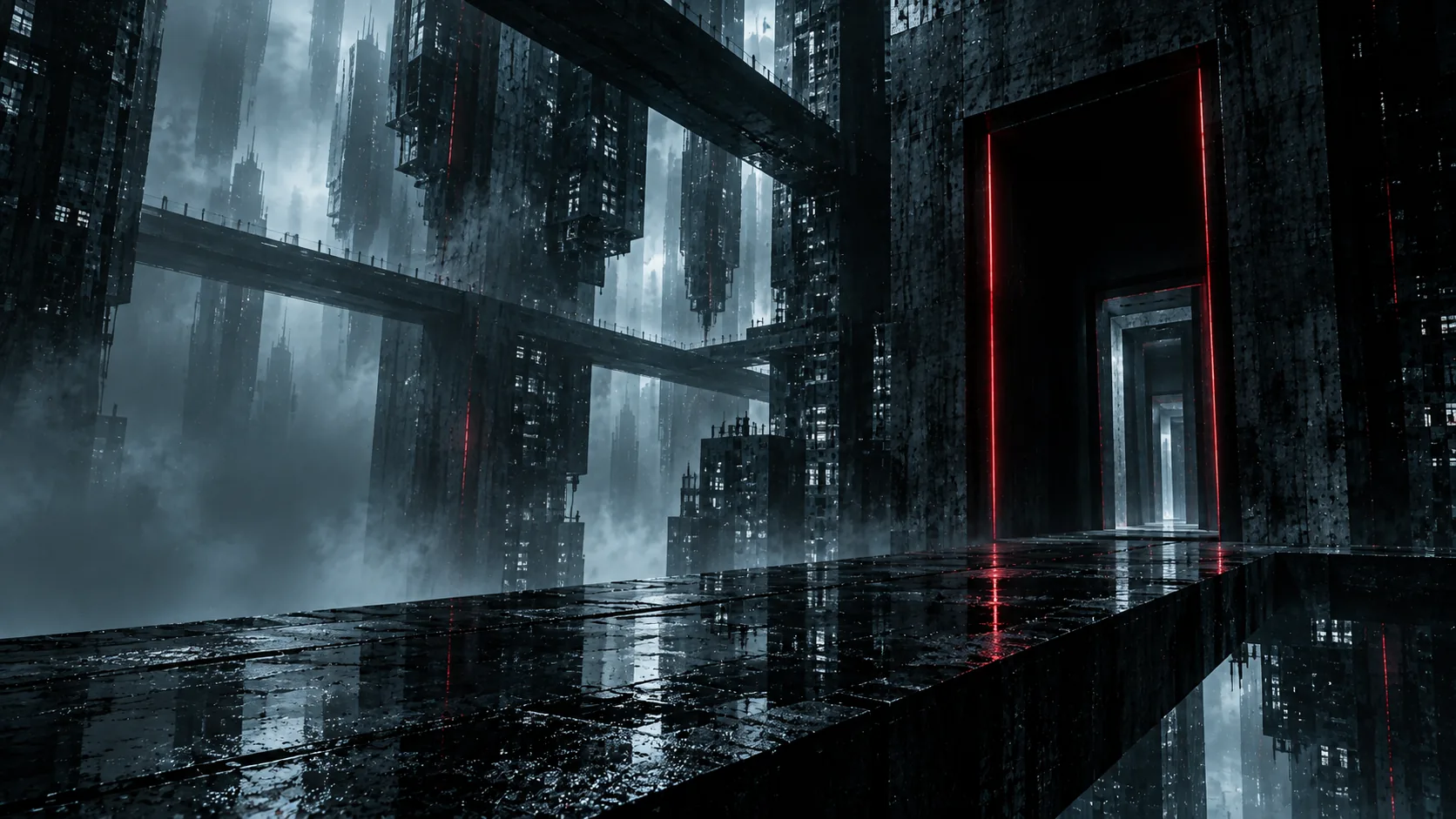
DARK APERTURE PICTURES / CASE FILE 01
Every human brain throws away the same slice of the visible world. Four researchers build a way to put it back.
Enter the archive01 / The signal
It is that you have been looking directly at it for eleven years and reporting nothing.
The Periphery is a grounded techno-noir series about perception, responsibility, and the cost of making a hidden layer addressable.
At a Chicago research lab, Lena Voss, Mira Chen, Adrian Kade, and Noah Reed discover the Peripheral Suppression Response: a repeatable failure of conscious visual access shared across species.
They call the reconstruction software a decoder. It does not create anything. It remaps what the eye already throws away—and the first thing it reveals is a place that has been present the entire time.
Read the season map02 / Case file
Every eye lands on the same region. The brain answers, then suppresses the answer before conscious report.
NeuroscienceMira finds the architecture. Adrian implements the Perceptual Residual Decoder. Noah supplies the sensor that can carry the signal.
InstrumentExposure trains suppression down. There is no reset. The people who build the instrument become its subjects.
Ethics / audit flagWhat if the world outside perception is not hiding? What if it is measuring who has started to look back?
R7 / it counts03 / Science file
The Peripheral Suppression Response is invented. The scientific territory around it is real: selective awareness, unconscious visual processing, richer optical measurement, and the gap between a signal and a report.
Explore the scienceLooking at a thing is not always the same as consciously seeing it.
↘ 02 / TimingWhy 180 milliseconds?The number is fictional; the boundary between early processing and awareness is not.
↘ 03 / ResponseSeeing without awareness.Behavior can carry visual information before a person can report a percept.
↘ 04 / InstrumentRecord wider than the eye.Light contains spectral, polarimetric, phase, and temporal properties ordinary images discard.
↘ 05 / SpeculationThe Decoder.It does not create evidence. It visualizes measurements an ordinary human representation leaves behind.
↘
● PSR / anomaly detectedScientific grounding is not a promise that the series could happen. It is the rule that makes its impossible thing feel expensive.
04 / Season 01
Each answer creates a worse question. Science is the pressure. The cost is the story.
12 files / one descent
Selected file 01
Three hundred subjects miss the same details. Then Lena overlays the eye-tracking and sees every gaze land exactly where nothing is.
05 / Visual language
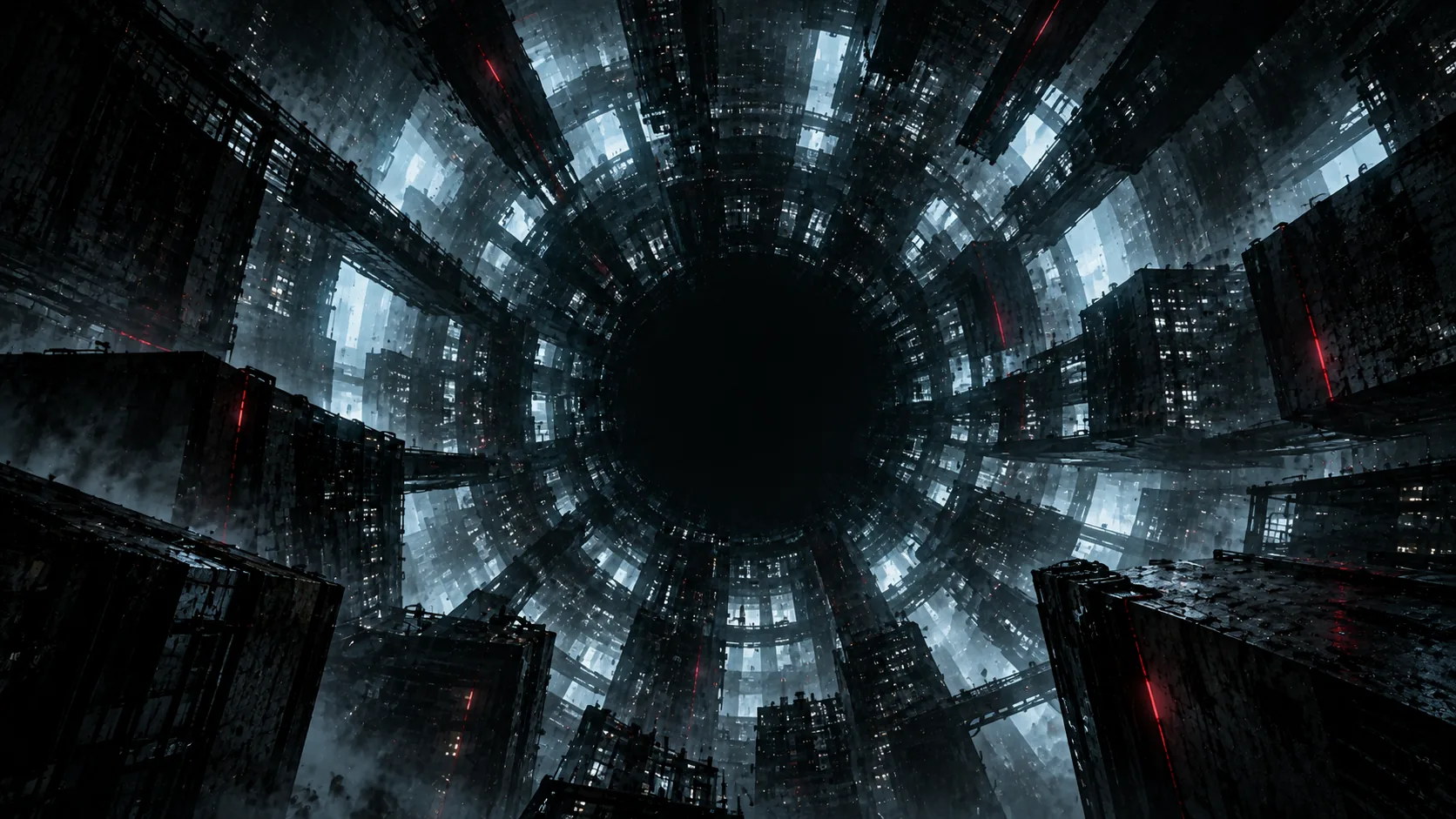
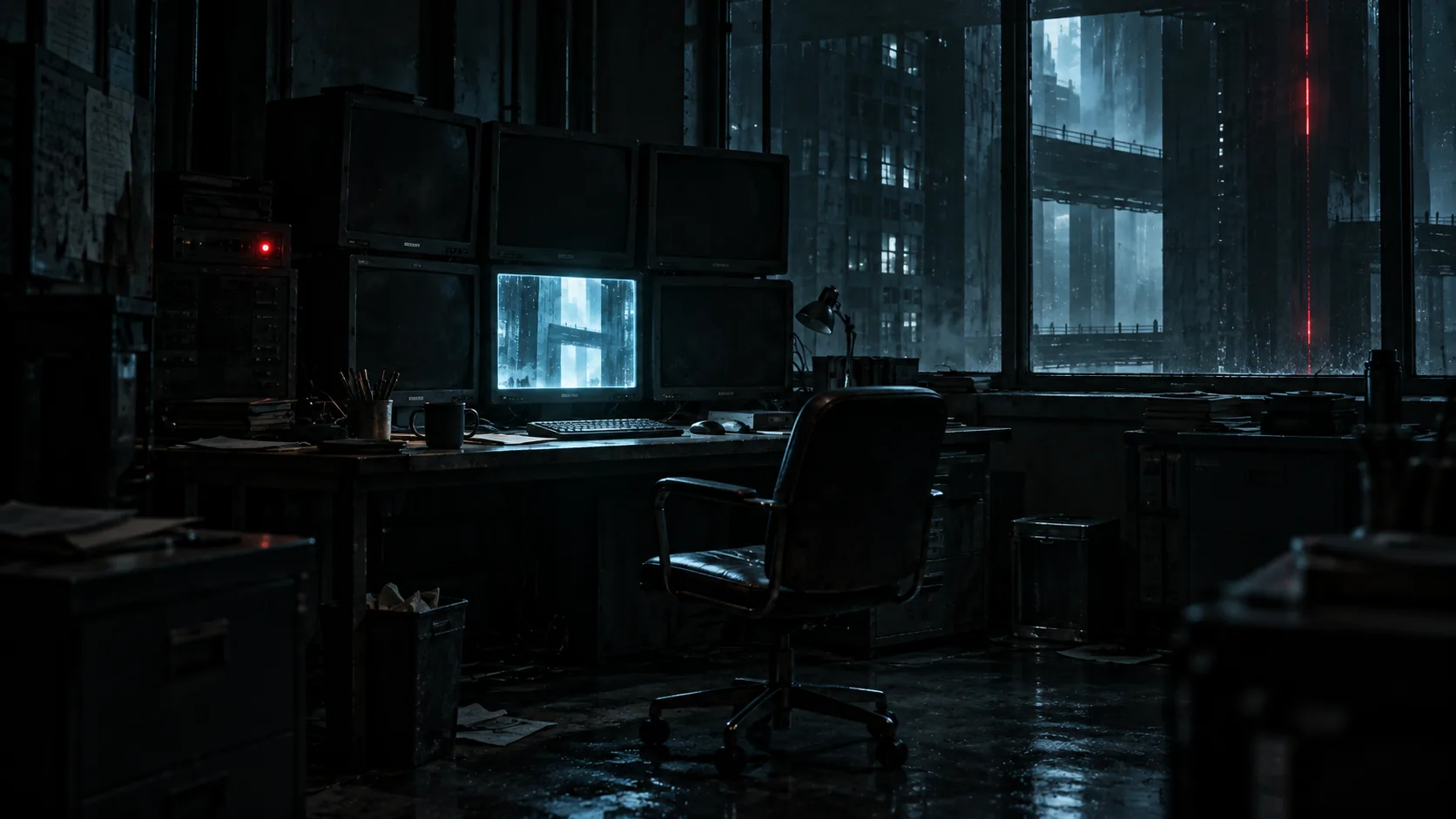
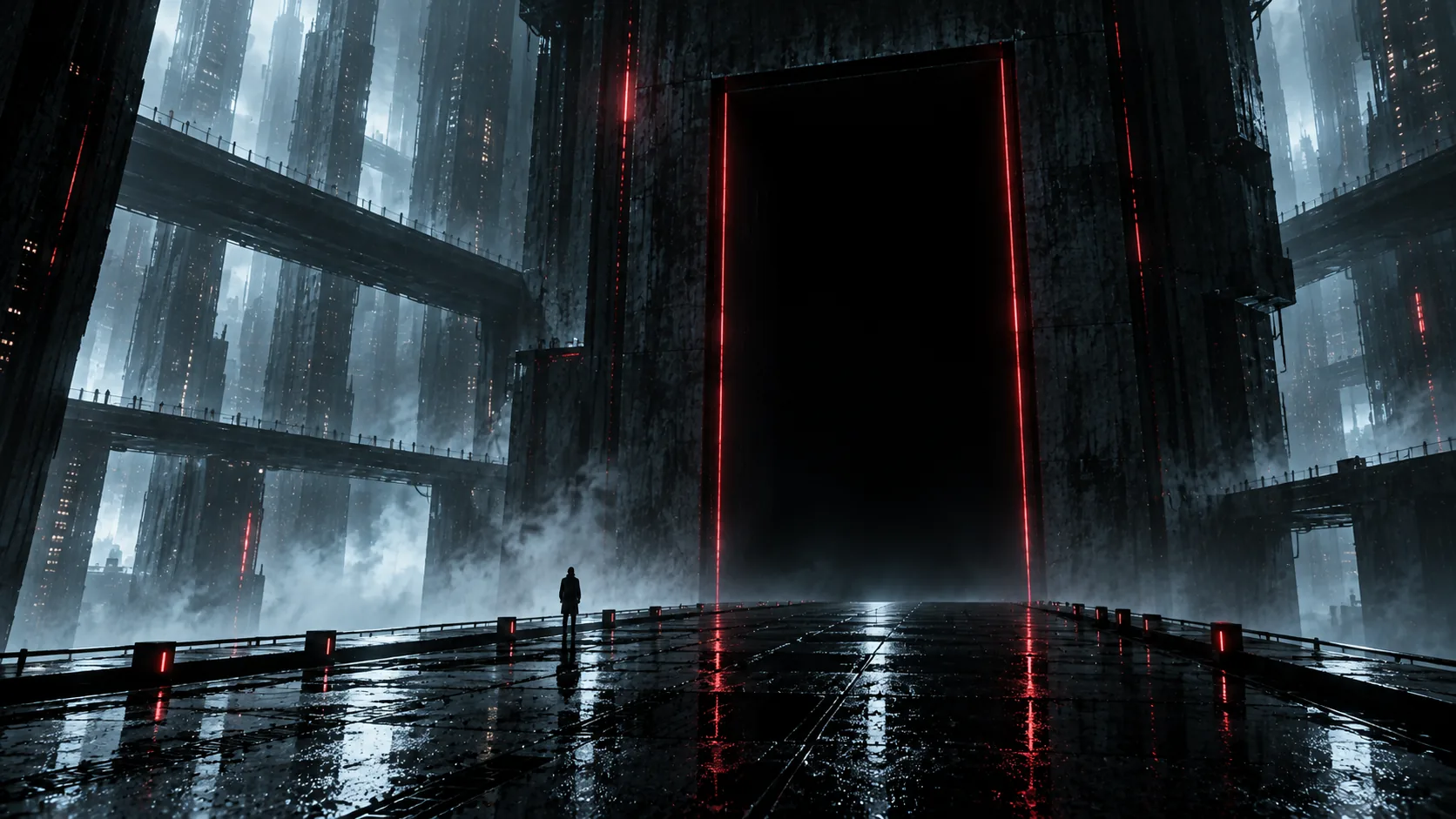
The look is grounded techno-noir: motivated light, dense night exposure, controlled imperfection. Darkness is not the effect. It is withheld information.
The instrument does not chase the answer.
People carry the cost in ordinary rooms.
The signature is not blur. It is absence with geometry.
06 / Reference
The Periphery is a scientific mystery and existential horror series about four researchers who learn that every human brain suppresses the same slice of visible information.
Season one is planned as twelve short episodes. Episode 101, Nothing There, is the pilot.
In the series, PSR is a repeatable failure of conscious visual access: the eye registers a category of information and the brain suppresses it before awareness.
07 / The threshold
The rig does not observe passively. Measurement is the interaction.
Return to title